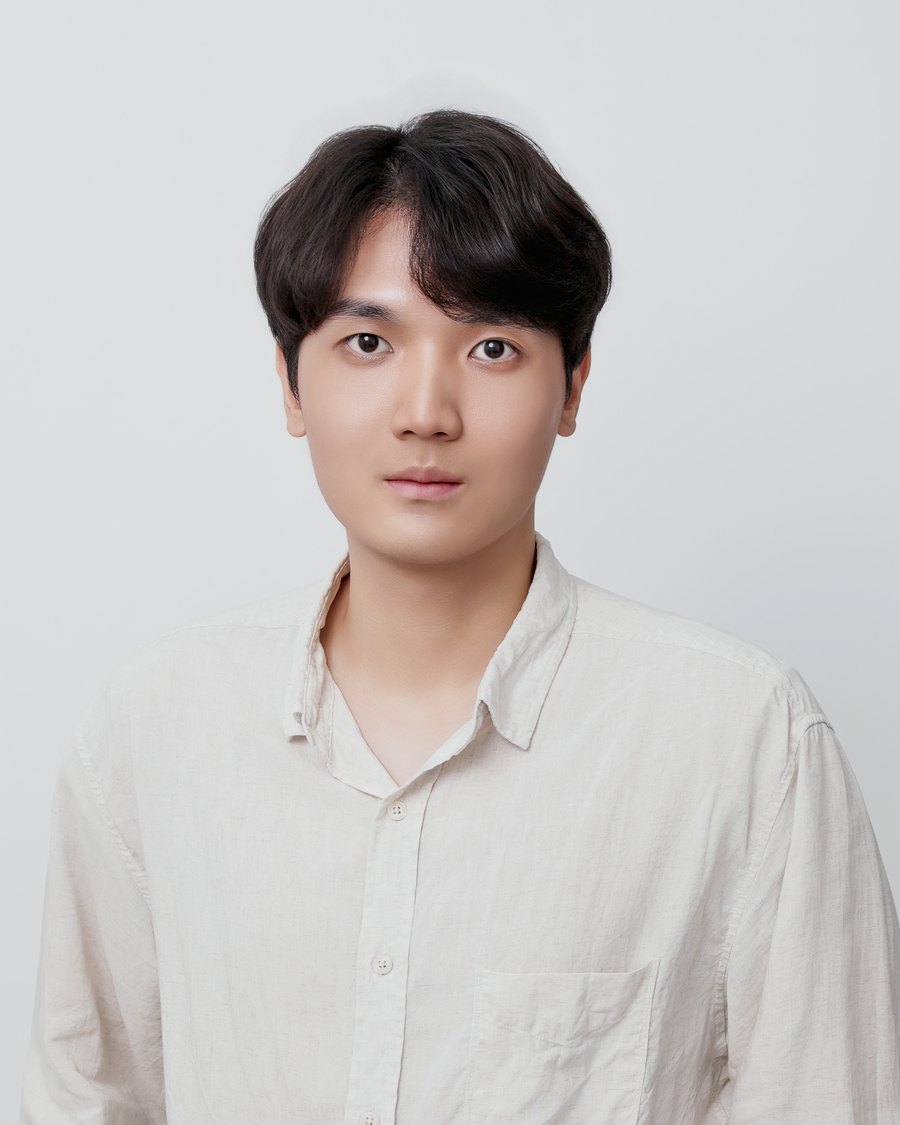
Research Homepage

Song, Minkyu

송민규

Department of Computer Science
Yonsei University

AI Systems · Machine Learning Systems · Large-Scale Intelligent Systems

I am an undergraduate student in Computer Science at Yonsei University.

My interests lie in AI systems, machine learning systems, and the structural behavior of large-scale intelligent systems. I am especially interested in how large AI systems behave when they are deployed as real execution systems involving memory, runtime, hardware, inference, and reliability constraints.

Rather than treating AI models only as algorithms, I try to understand them as systems: systems that store, compress, retrieve, schedule, fail, and scale. My current work and study focus on building the technical foundation needed to analyze these systems from both computational and mathematical perspectives.

I am also interested in statistical physics, information theory, and quantum information as mathematical languages for thinking about computation, inference, and complex systems.

AI Systems and Machine Learning Systems Large-Model Inference and Runtime Efficiency Memory, Scheduling, and Reliability in Large-Scale AI Systems Agentic AI Failure Modes and Long-Horizon System Behavior Mechanistic Understanding of Deep Learning Systems Statistical and Information-Theoretic Perspectives on Intelligent Systems Quantum Information and Computation

I am currently working on independent research projects around large-scale AI systems, with a focus on memory, inference, reliability, and system-level behavior.

My work is motivated by a simple question:

How do large intelligent systems preserve, lose, compress, and reorganize information under real computational constraints?

Current directions include:

  • studying LLM serving runtimes and execution bottlenecks;
  • building foundations in GPU programming and machine learning systems;
  • exploring reliability and failure modes in agentic AI systems;
  • developing mathematical perspectives on information, computation, and complex systems;
  • maintaining a secondary interest in quantum information and computation as a formal language for information processing.

Accepted Poster · ICML 2026 Workshop on Failure Modes in Agentic AI (FAGEN)

When Retrieval Fails Before It Begins: Structurally Indirect Prerequisite Eviction as a Retention Failure in Agentic Memory

Minkyu Song

Agentic AI · Memory Retention · Failure Modes · Graph Robustness · Prerequisite Eviction

  • Reviewer, ICML 2026 Workshop on Failure Modes in Agentic AI (FAGEN)

Textbooks

Programming Massively Parallel Processors

David B. Kirk, Wen-mei W. Hwu

Introduction to Machine Learning Systems

Vijay Janapa Reddi

Deep Learning

Ian Goodfellow, Yoshua Bengio, Aaron Courville

Lectures on Phase Transitions and the Renormalization Group

Nigel Goldenfeld

Information, Physics, and Computation

Marc Mézard, Andrea Montanari

The Road to Reality

Roger Penrose

Quantum Computation and Quantum Information

Michael A. Nielsen, Isaac L. Chuang

Open Source Systems

vLLM

Inference serving runtime for large language models

Transformers

Model implementations and ecosystem for modern deep learning systems

My work draws on ideas from:

Computer Science

systems, runtimes, parallel computing, and large-scale inference

Artificial Intelligence

deep learning, agentic AI, mechanistic understanding, and reliability

Mathematics and Physics

statistical physics, information theory, complex systems, renormalization, and quantum information

I value open-source software not only as a way to share code, but also as a form of research infrastructure.

Many of the systems I study, including modern machine learning frameworks and large-model serving runtimes, exist because researchers and engineers have built shared tools that others can inspect, extend, and improve. I hope to contribute to this ecosystem as I continue to develop my own technical foundation.

I am also interested in AI-assisted research as a new epistemic medium for scientific and engineering work. As modern research fields become increasingly dense with accumulated literature, AI systems may help researchers explore large conceptual spaces, connect distant ideas, and generate candidate directions that would be difficult to discover through purely linear search.

I do not view this as delegating knowledge creation to AI. The responsibility remains with the human researcher: to define the problem, judge relevance, verify claims, formalize arguments, run experiments, and transparently record how AI systems contributed to the work.

In this sense, Human-AI Co-Research is not a way to bypass research ethics, but a demand for stronger ones: transparency, reproducibility, and clear human accountability over AI-mediated exploration.